
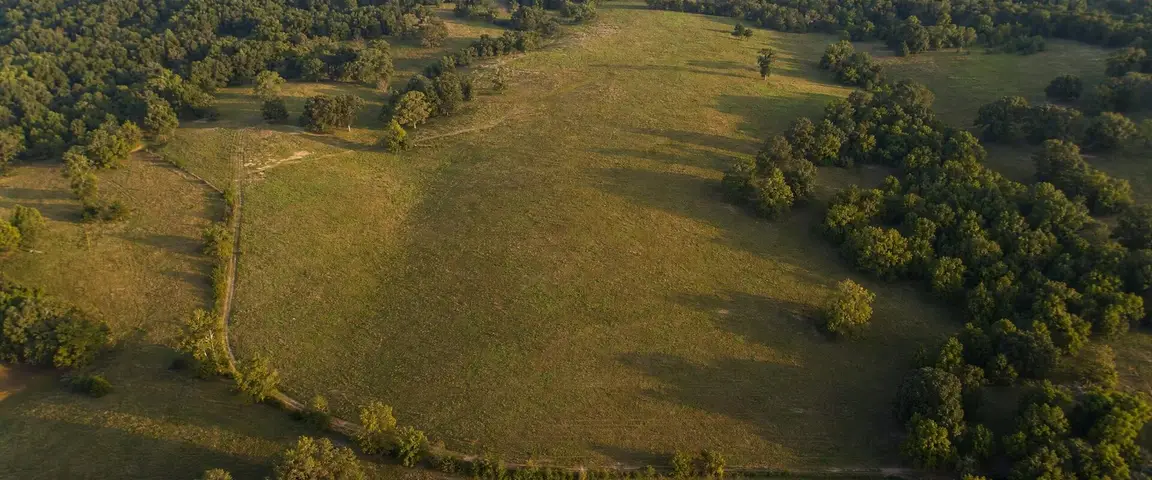
Large acreage seller resource
How to Sell Large Rural Acreage: A Practical Guide for Landowners
Selling 10, 25, 50, or 100+ acres is not the same as selling a small homesite. The buyer pool is narrower, the questions are more detailed, and the right path depends on your land, your timeline, and what you need from the sale. This guide explains how to sell large rural acreage without pretending that every property—or every seller—needs the same answer.
Start with the decision, not the listing
Before you set a price or talk with buyers, decide what you are trying to solve. Some owners want the broadest possible marketing exposure and are comfortable waiting for the right buyer. Others inherited land they do not use, live far away, or need to stop carrying taxes, maintenance, or family responsibility. A few are weighing a sale because access, title, or a tax issue has become difficult. Those are different situations, and they call for different sale paths.
There is no universal “best way” to sell large acreage. A traditional listing, a land specialist, a direct cash sale, an auction, seller financing, or keeping the tract intact can each be reasonable in the right situation. The useful question is: which option gives you a workable combination of price, certainty, timing, and effort? Our overview of land sale options can help you compare the paths before committing to one.
1. Build a clear picture of what you own
Large rural acreage is often marketed with broad labels: hunting land, timberland, pasture, recreational acreage, a future homesite, or a long-term investment. Those labels may be helpful, but they do not replace facts. Buyers will eventually ask how the property is reached, whether it has recorded legal access, what the boundaries are, whether utilities are nearby, how the terrain lays, and what use is actually allowed.
Start a simple property file. Include the deed, any survey or plat you have, tax bill, access and easement documents, photographs, maps, lease information, and notes about fences, gates, roads, ponds, creeks, timber, structures, or known issues. You do not need to solve every unknown before you explore a sale. You do need to avoid presenting assumptions as facts.
Access deserves special attention. A property that is difficult to reach can still be saleable, but the buyer needs a candid explanation of the route and the legal right to use it. If access is uncertain, read our guide to landlocked land before treating a map line or a neighbor’s past permission as a permanent solution.
2. Price large acreage from evidence, not a number you hope will work
Acreage pricing is rarely as simple as multiplying acres by a nearby listing price. Two tracts in the same county can have very different values because of road frontage, legal access, topography, flood exposure, usable acreage, water, timber, mineral status, improvements, local demand, and the type of buyer the land can realistically serve. A 100-acre tract may not command the same per-acre price as ten 10-acre tracts, and it should not be assumed that it will.
Begin with recent sales that are genuinely comparable in location, size range, access, and use. Then review current listings as competition, not proof of value. A listing price shows what an owner hopes to obtain; it does not show what closed. If the numbers are unclear, obtain local land-market input or an appraisal appropriate to the reason you need the value. An honest range is more useful than a polished number that has no support.
Price also has a timeline component. A seller who can wait for a specialized buyer may make a different decision from someone who needs a clean closing soon. Neither goal is wrong. The mistake is assuming a fast offer and a maximum-market strategy provide the same trade-offs.
3. Decide whether to sell the tract whole or consider a split
Owners of large rural acreage often wonder whether smaller parcels would bring more total money. Sometimes they can. In other cases, the cost, time, approvals, surveying, road work, and added holding burden outweigh any potential increase. A split may also create access, utility, drainage, or buyer-qualification issues that did not exist when the land was held as one tract.
Do not divide simply because a smaller-acreage price looks higher online. First ask what local rules allow, whether each resulting parcel would have usable and legal access, what surveys or infrastructure would cost, and whether there is actual demand for the proposed parcel sizes. Selling the tract intact is often the more straightforward solution when the property’s rural character is part of its appeal.
4. Choose a sale path that matches your situation
Traditional marketing
A land-focused broker or agent can be useful when you want broad exposure, can accommodate a listing period, and want help reaching buyers who value the property’s specific traits. Ask how the property will be positioned, which land platforms will be used, how buyer questions will be handled, and how the price was developed. Residential experience alone does not always translate to larger rural tracts.
Selling without a realtor
Owner-led sales can reduce commission cost, but they require you to manage pricing, inquiries, documents, showings, negotiations, and follow-up. It can be a fit for a seller who has time and strong property information. Review the practical steps in how to sell land without a realtor before relying on a basic online listing alone.
A direct sale
A direct sale may fit when convenience, certainty, or a simpler closing matters more than exposing the property to every possible buyer. Compare the offer with the effort and cost of a longer market strategy. Ask whether the buyer is prepared to close, what contingencies are included, who pays which closing costs, and how access, title, taxes, or survey questions will be handled.
Seller financing
Seller financing can broaden the buyer pool, but it means the seller is taking on payment and default risk instead of receiving the full price at closing. It requires careful documents and a deliberate decision about the buyer’s ability to pay. It is not a simple substitute for an ordinary cash sale.
5. Prepare the acreage for buyer questions
Good rural-land marketing makes it easier for a serious buyer to understand the tract without hiding the hard parts. Show the roads, gates, terrain, water features, clearings, timber, fields, and boundaries as accurately as possible. If a buyer will need a four-wheel-drive vehicle or must use a particular easement route, say so. Clear photographs, an honest map, and organized documents reduce confusion better than exaggerated claims.
A modest cleanup can help: remove trash near the road, make a gate usable, mark the driveway, and organize information before showings. Do not spend heavily on improvements just to make the listing look better unless you understand the likely return. Rural buyers may value a rough tract for hunting, timber, privacy, farming, or recreation; a suburban-style cleanup is not always the answer.
6. Address title, taxes, and ownership issues early
A sale commonly slows down because a title issue, estate question, unpaid tax balance, lien, access dispute, or outdated ownership record surfaces after an offer. You do not need a perfect file to begin, but early disclosure gives you more choices. If the acreage was inherited, start with our guide to selling inherited land and confirm who has authority to sign.
If property taxes are behind, do not ignore the notice while you decide whether to sell. Your county’s balance and deadline control. Our back-taxes resource and the property tax sale deadline guide explain why a county payoff should be confirmed directly before you make a plan around a sale.
7. Review offers by more than the headline price
The best offer is not always the highest number on page one. Compare the actual price, earnest money, feasibility period, financing condition, closing date, requested extensions, title requirements, access assumptions, survey requests, and who bears any cost of correcting an issue. A slightly lower but well-supported offer may be more certain than a higher offer with vague contingencies. If you do not understand an agreement, pause and ask a qualified closing, title, legal, or tax professional before signing.
For state-level starting points and local pages, visit Sell My Vacant’s state resource guide. Local conditions, county practices, and land use rules can materially change a decision.
Frequently asked questions about selling large rural acreage
How long does it take to sell large rural acreage?
There is no reliable universal timeline. The answer depends on location, price, access, market demand, property use, documentation, and the sale method. A seller should be cautious of anyone who promises a specific result without reviewing the tract.
Do I need a new survey before selling?
Not every sale begins with a new survey, but buyers, lenders, title companies, or a division plan may require one. An older survey can still be useful background. Ask the closing professional what the transaction requires before assuming the answer.
Can I sell rural land with unpaid taxes or a title issue?
Many issues can be addressed during a sale, but they affect timing, proceeds, and which buyer can perform. Get the current payoff or title information early. Do not assume an agreement to sell pauses a county deadline or resolves an ownership issue by itself.
Should I accept a cash offer for my acreage?
It depends on the full terms and your goals. A cash offer may reduce contingencies and shorten the path to closing, but it may not be the right choice if your priority is maximum exposure over time. Compare the offer with your other realistic paths rather than with an unsupported asking price.
A steady next step
If you are considering a sale, begin by organizing the property facts, confirming any deadline that could affect your ownership, and comparing the sale paths that fit your timeline. The goal is not to rush a decision. It is to make an informed one.