
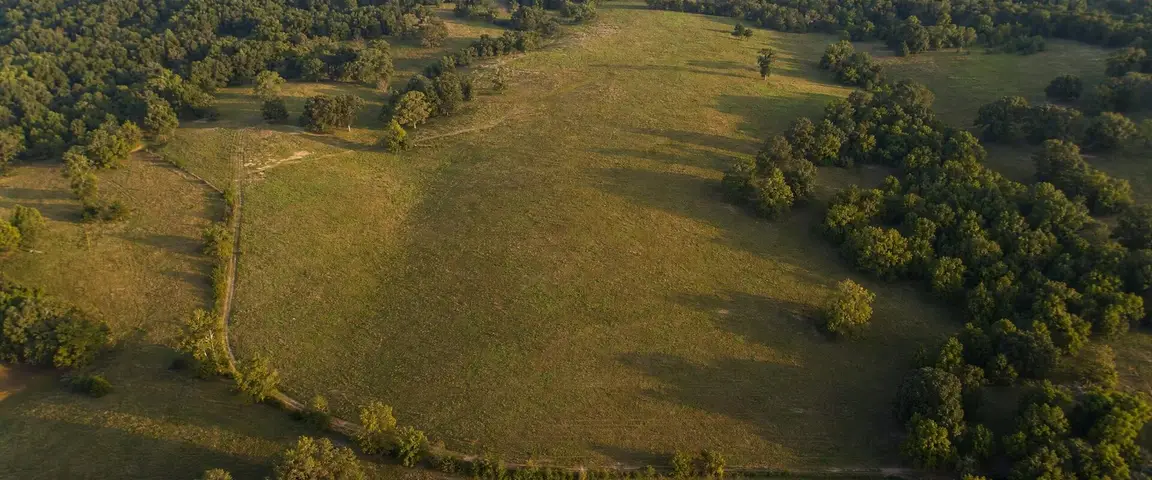
Landlocked Land: Can You Sell Property With No Legal Access?
Yes, landlocked land can be sold. But a parcel without clear legal access to a public road is usually harder to evaluate, use, finance, develop, and market than a parcel with documented access.
The important distinction is between physical access and legal access. A person may be able to reach the property by driving across a neighbor’s land, using an old logging road, or passing through an unlocked gate. That does not necessarily mean the owner has an enforceable right to use that route.
This guide is part of the Problem Land Encyclopedia: Access & Boundaries section.
What Does “Landlocked Land” Mean?
Landlocked land is a parcel with no clear, usable legal route to a public road. It may be completely surrounded by land owned by other people, or it may be reachable only by crossing neighboring property without a recorded right of way.
An easement is a property interest that gives one party permission to use another person’s land for a stated purpose. An affirmative easement, for example, can permit travel across a road on the neighboring property.[1] The exact access rights that apply to a particular parcel depend on the deed, recorded documents, title history, state law, and facts on the ground.
| What an owner sees | What it may actually mean |
|---|---|
| A dirt road reaches the parcel | There may be physical access, but the legal right to use the route may be unclear. |
| A neighbor has always allowed entry | The permission may be informal and may not transfer to a future owner. |
| The route appears on a map | A map can be useful evidence, but it may not establish a recorded access right. |
| The parcel was split from a larger tract | The tract history may be relevant, but it requires property-specific review. |
| The property touches a road at one point | The frontage may be too narrow, unusable, disputed, or not connected to the practical route. |
Landlocked Land Is Not Always the Same as “No Legal Access”
The two conditions overlap, but they are not always identical. Landlocked land generally describes a parcel that lacks a route to a public road. No legal access can describe a parcel that appears reachable in practice but does not have a clear documented right to cross the intervening land.
For example, a parcel may be reached using a neighbor’s driveway. If there is no easement, road agreement, or other enforceable access right, the property may have physical access but still present a legal-access problem.
Why Landlocked Land Is Harder to Sell
Access is one of the first practical questions a buyer asks. If the answer is unclear, the buyer may not know whether they can reliably enter the property, bring in equipment, establish a homesite, maintain a road, or use the land for the purpose they have in mind.
The issue is not that every landlocked parcel has no value. The issue is that the buyer pool is narrower, and the remaining buyers often need clearer information before they can make a decision.
| Buyer question | Why it matters |
|---|---|
| Can I legally get to the property? | A buyer needs a route that does not depend solely on verbal permission from a neighbor. |
| Can I use the route for my intended purpose? | A route suitable for a pickup may not be suitable for construction equipment, timber activity, emergency access, or a homesite. |
| Who maintains the route? | Road maintenance, gates, culverts, washouts, and shared expenses can affect the practical value of access. |
| Can utilities use the same corridor? | Vehicle access and utility access may involve different rights, costs, and approvals. |
| Will a lender or title company accept the evidence? | Financing and title requirements vary, but unclear access may create additional review or delay. |
A landlocked parcel can still appeal to a neighboring owner, recreational buyer, conservation-minded buyer, or investor who understands the condition. The key is representing the access reality accurately rather than assuming that an informal route solves the problem.
How to Check Whether Your Land Has Legal Access
Start by gathering facts. The purpose is not to decide your own legal rights from a web page. It is to collect the records that help a title professional, surveyor, attorney, or serious buyer understand the parcel.
1. Read the Current Deed and Legal Description
Find the current recorded deed and any exhibits, plats, surveys, or prior documents referenced in it. Look for terms such as easement, right of way, ingress and egress, access, road, or subject to. A legal description may identify an access route even when a basic parcel map does not.
2. Review Recorded Plats and Parcel Maps
A county parcel map is a useful starting point for seeing the public road, neighboring parcels, and apparent frontage. Then compare that picture with recorded plats and surveys. A parcel map is not necessarily the final proof of an access right, but it can help identify the documents and questions that need follow-up.
3. Request a Title Review
A title professional can identify recorded easements, rights of way, exceptions, old documents, and other recorded matters that may affect access. This can be especially important if the route crosses multiple neighboring parcels or the land has changed hands many times.
4. Confirm Whether the Route Is Public or Private
A road name, a gate, or frequent public use does not automatically mean a route is a public road. If public-road status matters, ask the appropriate county road, planning, or public-works office. Confirm who owns the route, who maintains it, and whether the public can legally use it.
5. Compare the Documents With the Ground
The recorded easement route and the road actually being used may not match. A surveyor can help identify whether the documented route reaches the parcel, whether it is in the expected location, and whether the route crosses a disputed line.
6. Get State-Specific Advice if the Records Conflict
An easement by necessity may arise in some circumstances involving a landlocked parcel created from a formerly unified tract, but the elements and standards vary by state and the property history matters.[2] If the access documents, title records, survey, or neighboring owner’s position conflict, consult a qualified real-estate attorney in the state where the land is located.
Do not treat a verbal promise, old custom, unlocked gate, or visible trail as a substitute for a property-specific review of the relevant records.
Common Paths Owners Consider
There is no single solution for all landlocked parcels. The right option depends on the existing documents, route location, neighboring owners, intended use, cost, timing, and state law.
| Path | What it may involve | Practical trade-off |
|---|---|---|
| Negotiate a recorded easement | Reaching an agreement with a neighboring owner for a defined access route. | May clarify access, but the neighbor may decline, request compensation, or require detailed terms. |
| Buy an access strip | Purchasing a narrow corridor between the parcel and a public road. | May create direct access, but it can be expensive or unavailable. |
| Clarify an existing easement | Reviewing the scope, location, width, and permitted use of a recorded right. | The easement may exist but still be unclear, impractical, or disputed. |
| Investigate the parcel history | Reviewing whether the property was split from a larger tract and whether the history matters under applicable law. | Requires property-specific legal review and may involve time or uncertainty. |
| Market for a different use | Positioning the parcel for recreation, conservation, hunting, neighboring expansion, or another use consistent with the access condition. | The buyer pool may be smaller, but the land may still fit a defined use. |
| Sell as-is | Disclosing the known access condition to a buyer prepared to evaluate it. | May avoid an expensive resolution process, but the buyer pool and price expectations may change. |
How Landlocked Access Can Affect Marketability
The impact of landlocked access on value is not a fixed percentage. It depends on the strength of the evidence, the feasibility of a solution, the intended use, the surrounding ownership, the local market, and the buyer’s tolerance for uncertainty.
A recreational parcel close to a willing neighboring owner may attract a different buyer than a parcel marketed as a potential homesite. A route that has a clear recorded easement may be a very different situation from a parcel dependent on informal permission. The more clearly the access condition is documented, the easier it is for a buyer to evaluate the property honestly.
Before changing the price, consider whether the real obstacle is an access issue rather than listing exposure. You may also want to review local land value signals, tax-sale timing, and vacant land holding costs.
Related Land Problems
Landlocked parcels often involve more than one access, title, or boundary question. Explore these related guides when they are published:
- Land with no legal access — when a route exists in practice but the right to use it is not clear.
- An unrecorded access easement — when access may have been used or agreed to without being clear in the records.
- A boundary dispute — when frontage, route location, surveys, or property lines are contested.
Need to compare this issue with the rest of the library? Explore all problem land guides.
Frequently Asked Questions
Can I sell landlocked land?
Yes. Landlocked land can be sold, but the buyer pool, transaction path, timing, and value discussion may differ from an accessible parcel. Clear disclosure and a realistic understanding of the access evidence are important.
Does a dirt road mean that I have legal access?
Not necessarily. A dirt road, trail, driveway, or gate can show that a route is being used. It does not by itself establish the owner’s legal right to continue using that route.
Can a neighbor block the only route to my property?
The answer depends on the route, the deed, any recorded easement, property history, state law, and the facts of the particular parcel. Do not assume either that a neighbor can automatically block access or that an owner automatically has the right to cross another person’s land.
Can I get an easement after I buy landlocked property?
An owner may be able to negotiate and record an easement with a neighboring owner. Whether another access right may exist depends on the parcel history and state law. A qualified local professional can help evaluate the documents and circumstances.
Will a lender finance landlocked land?
Lender requirements vary by loan type, intended use, access documentation, title evidence, and the lender’s own underwriting standards. This guide cannot predict a lender’s decision for a specific parcel.
Do I need a survey before selling landlocked land?
Not always. A survey can be useful when the route, boundary, frontage, or location of an easement is unclear. Whether the cost makes sense depends on the facts of the parcel and the sale path you are considering.
What records should I gather first?
Start with the deed, any recorded plat or survey, known easement documents, title materials if available, and county parcel-map information. Those records provide a stronger starting point for a buyer or qualified professional.
Have Landlocked Land You Want to Sell?
If you own 10+ acres with a landlocked or difficult-access issue and do not want to spend months trying to resolve it before selling, Sell My Vacant may be able to review the property directly. We evaluate difficult rural and vacant land individually, including parcels with access, title, environmental, and buildability concerns.
This is a property-review request—not a legal opinion, title commitment, survey, or guarantee of an offer.
Request a Problem-Land Review
Form introduction: Tell us the county and state, approximate acreage, and what you know about the access issue. If the property fits our buying criteria, we will review it and let you know whether a direct cash offer may be possible.
| Form field | Recommended prompt |
|---|---|
| Property location | County and state; include the address or nearest road if known. |
| Acreage | Approximate acreage. |
| Known land issue | Landlocked land, no legal access, easement question, boundary question, or another known concern. |
| Owner name | Your name. |
| Phone | Best number for a follow-up conversation. |
| Best email for follow-up. |
Button text: Request a Problem-Land Review
Important Disclosure
This page provides general information about landlocked land and property access. It is not legal, title, survey, engineering, lending, environmental, or tax advice. Rights, access routes, easements, road status, remedies, requirements, costs, and timelines vary by parcel, documents, county, and state. Confirm the facts of your property with the appropriate title professional, surveyor, attorney, engineer, lender, environmental specialist, or local authority.